-
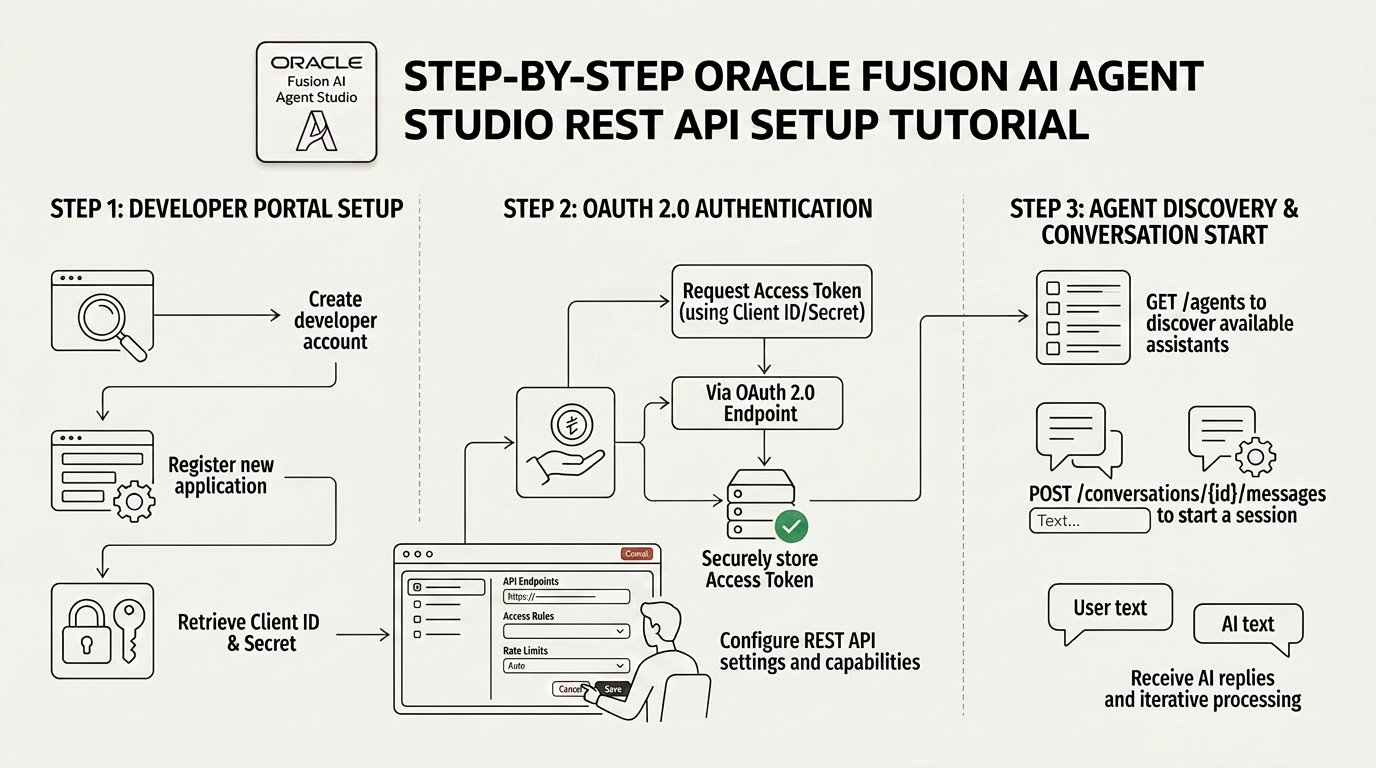 Continue reading →: How to call an External REST API in Oracle Fusion AI Agent Studio: Step-by-Step Guide
The next generation of enterprise AI is not just about answering questions – it is about enabling intelligent agents to interact with real business systems, retrieve contextual information, and trigger meaningful actions. While conversational intelligence creates a compelling user experience, the true value of an AI agent emerges when it…
-
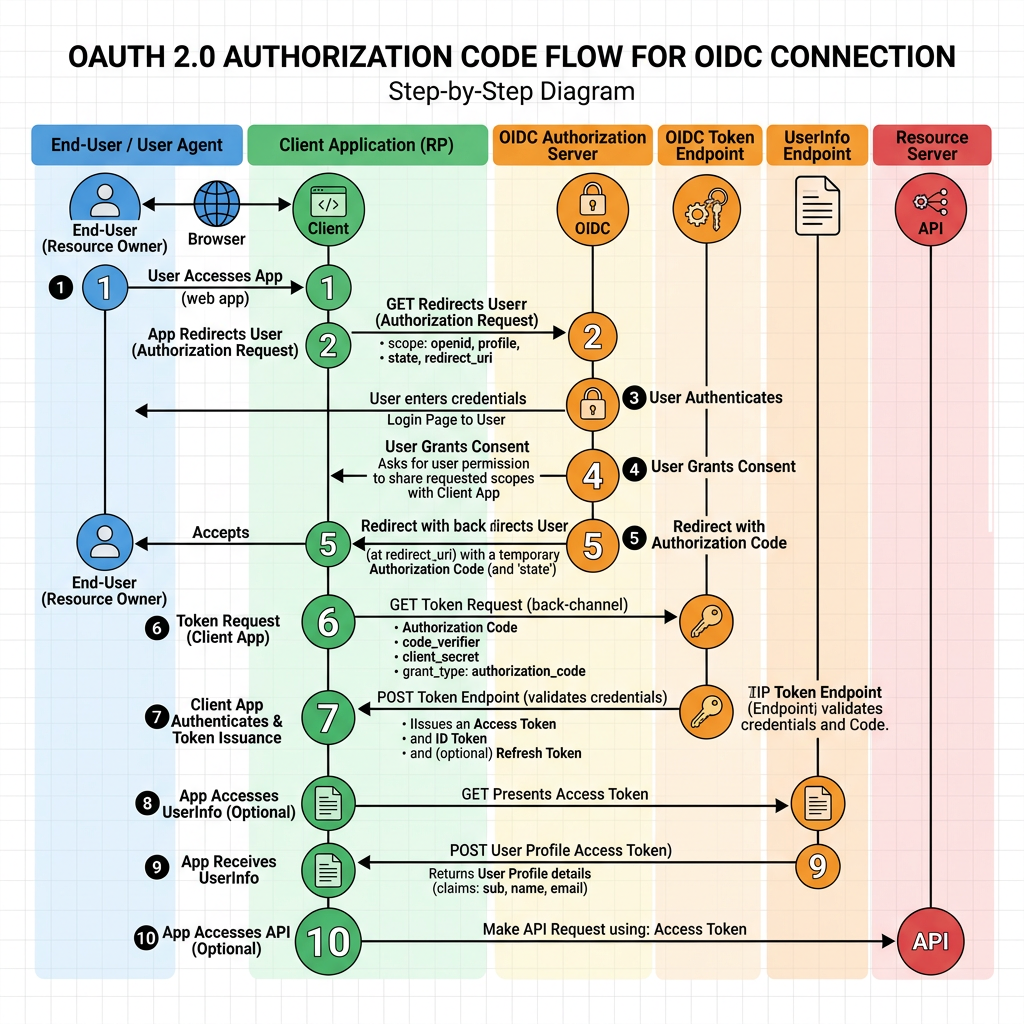 Continue reading →: Secure OAuth 2.0: Using Authorization Code for Oracle Integration
Modern integrations are no longer just about connecting systems – they are about doing so securely, reliably and in a way that aligns with enterprise identity and access management standards. As organizations increasingly expose APIs and integration endpoints through cloud platforms, selecting the right OAuth 2.0 grant type becomes a…
-
Continue reading →: Setting Up Security for AI Agent Studio in Oracle Fusion SCM
Oracle Fusion’s AI Agent Studio enables automation and intelligent workflows, but accessing it often requires proper security configurations. This blog provides a step-by-step guide for administrators to set up user roles and permissions, allowing them to effectively access and configure AI Agents within Oracle Fusion Supply Chain Management.
-
 Continue reading →: How to Build Your First Workflow Agent in Oracle Fusion AI Agent Studio
AI agents are rapidly changing how enterprises interact with applications, data, and business processes. But the real promise of enterprise AI lies beyond conversational responses — it lies in enabling intelligent agents that can understand intent, execute actions, and orchestrate workflows across business functions. Oracle Fusion AI Agent Studio brings…
-
 Continue reading →: Oracle Fusion AI Agent Studio + Autonomous DB MCP Server: A Step-by-Step Integration Guide
Enterprise AI is evolving rapidly from conversational assistance to intelligent systems capable of securely interacting with enterprise data and executing context-aware actions. While AI agents can provide value through natural language interactions, their true business impact comes from their ability to access trusted data sources and transform information into actionable…
-
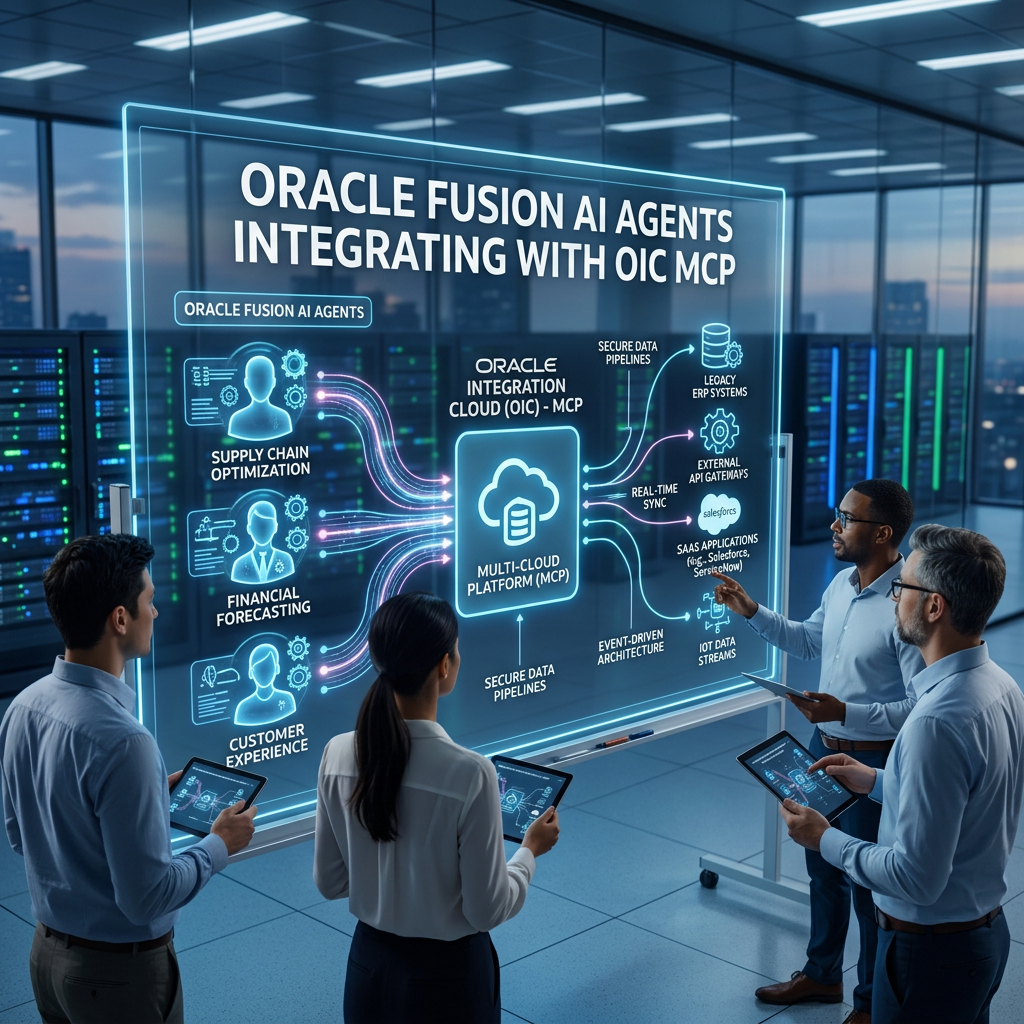 Continue reading →: Empowering Oracle Fusion AI Agents: Integrating with OIC MCP
Enterprise AI is rapidly moving beyond simple chat experiences into a world where agents can reason, decide, and take action across business systems. However, an AI agent is only as valuable as the systems it can securely interact with. This is where the combination of Oracle AI Agent Studio and…
-
Continue reading →: Creating AI Agents using Business Object in Oracle Fusion
In my previous blog, I had demonstrated how to create a RAG-based AI Agent using Oracle Fusion AI Agent Studio. In this blog, I will demonstrate how we can create an AI Agent using a Business Object. Oracle Fusion provides powerful REST APIs that allow applications and integrations to access…
-
Continue reading →: Setup an Oracle AI Data Platform Workspace instance in OCI
As organizations continue adopting AI and analytics solutions, having a centralized environment for data science and collaboration becomes increasingly important. Oracle AI Data Platform provides a unified platform that helps teams manage data, run analytics workloads, and develop AI-driven solutions efficiently. One of the first steps in getting started is…
-
Continue reading →: Setting Up Workspaces, Clusters and Notebooks in Oracle AI Data Platform
Oracle AI Data Platform provides a unified environment where teams can organize data, run analytics, and build AI solutions collaboratively. One of the key components of the platform is the AIDP Workbench, which allows users to create workspaces, configure compute clusters, and develop notebooks for data analysis and machine learning…
-
Continue reading →: Creating RAG-Based AI Agents in Oracle Fusion HCM
In my previous blog, I had demonstrated how to setup the security for Oracle Fusion AI Agent Studio for Oracle HCM. In this particular blog, I will demonstrate how we can create a RAG-Based agent using AI Agent Studio. For demonstration purposes, I will be creating a policy agent. I…
-
Continue reading →: Setting Up Security for AI Agent Studio in Oracle Fusion HCM
Oracle Fusion’s AI Agent Studio enables automation and intelligent workflows, but accessing it often requires proper security configurations. This blog provides a step-by-step guide for administrators to set up user roles and permissions, allowing them to effectively access and configure AI Agents within Oracle Fusion Cloud Human Capital Management.
-
Continue reading →: Transforming OIC Projects into MCP‑Enabled AI Tools
Enterprise AI is evolving rapidly, but in many organisations the primary bottleneck is no longer model capability – it’s execution. While large language models can summarise, reason, and plan effectively, enterprises typically cannot allow them to directly call APIs or trigger business processes without robust governance, controls, and oversight. This…
-
Continue reading →: Create a Confidential Application to Connect to OIC using Client Credential Grant Type
In modern enterprise ecosystems, seamless integration between applications is critical. When working with Oracle Integration Cloud (OIC), secure communication becomes a top priority. This is where OAuth 2.0-based authentication and confidential applications come into play. A confidential application is a secure client that can safely store credentials such as a…
-
 Continue reading →: Decrypting Files with PGP in OIC: A Step-by-Step Guide
In my previous blog, we walked through generating public and private PGP keys and used the public key to encrypt a CSV file in OIC. In this follow‑up, we’ll build the reverse flow — decrypting that encrypted file using OIC. This time, we’ll use the private PGP key to restore…
-
Continue reading →: Encrypting Files with PGP in OIC: A Step-by-Step Guide
In today’s integration landscape, secure file exchange isn’t just a best practice – it’s a non‑negotiable requirement. Whether you’re exchanging data with external third-party applications, moving files across internal systems, or automating business processes, encryption plays a central role in protecting sensitive information. Oracle Integration Cloud (OIC) makes this easier…
-
Continue reading →: Create Your First Oracle Generative AI RAG Agent
In my previous blog, we learnt about the pre-requisite steps for provisioning an Oracle Generative AI RAG Agent in Oracle Cloud Infrastructure (OCI). In the subsequent blog, Creating a Knowledge Base for creating Oracle Generative AI RAG Agent, we learnt how to create a storage bucket and then created a…
-
Continue reading →: Creating a Knowledge Base for creating Oracle Generative AI RAG Agent
This is the second blog of the series Create an Oracle Generative AI RAG Agent. For simplicity, I have broken the post down into 3 parts: In my previous blog, we discussed the steps that you need to perform if your tenancy is not subscribed to any of the regions…
-
Continue reading →: Enabling Oracle Generative AI Agent for OCI Regions
What are Generative AI RAG Agents? Generative AI Agent is a fully managed service that combines the power of Large Language Models (LLMs) with AI technologies, to create intelligent virtual agents, that can provide accurate, personalized and contextually-relevant responses to end-user queries, and creates a highly engaging customer experiences. The…
-
Continue reading →: Creating a basic OIC Integration with REST
This post would be particularly useful for those who are just starting their learning journey with Oracle Integration Cloud. We will create a basic and fundamental integration to call and invoke a simple REST web service in an orchestrated integration. We will learn how to: So let us begin. Create…
-
Continue reading →: Manage File Server Settings in Oracle Integration 3
In one of the previous posts we learnt how to create a Oracle Integration 3 instance. In the next one, we saw how to enable the File Server. In this particular post, we will explore some of the basic configuration for the File Server from the Oracle Integration instance. More…
-
Continue reading →: Managing Users and User Groups in OCI
You can create an user or user groups if you are granted identity domain administrator or user administrator role in the Administrators page Identity Cloud Services console(IDCS). In this blog we’ll learn how to create users and user groups from the IDCS page within the OCI console. Create User To…
-
Continue reading →: Enabling File Server in Oracle Integration 3
If you are looking to design a file-based integration, then you need to use a File Server. Oracle Integration comes bundled with an SFTP server which you can use to store, share, and receive files, including files for SaaS integrations and third-party transfers. Oracle provides you with 500 GB of…
-
Continue reading →: Creating an Oracle Integration 3 Instance
Oracle Integration Cloud instances help you to design integration between the cloud applications and on-premise applications. It is a fully managed, pre-configured environment loaded with hundreds of pre-built adapters to connect with Oracle and other third-party applications. You can automate business processes, develop visual applications, use an SFTP-compliant file server…
-
 Continue reading →: How to Bulk Upload Value Sets in Oracle Fusion
In this blog we will look at how we can bulk upload Value Sets into Oracle Fusion. We will learn the process to import both Independent and Dependent Value Sets. Similar to Bulk Upload Lookup Types and Lookup Codes, we will be using File Based Loader. The process consists of…
-
 Continue reading →: Bulk Upload Lookup Types and Lookup Codes in Oracle Fusion
In this blog we will look at how we can bulk upload Lookup Types and corresponding Lookup Codes into Oracle Fusion. We can use File Based Loader for this purpose. The process is fairly simple and consists of the following steps. So let’s understand each step in more detail. Prepare…